
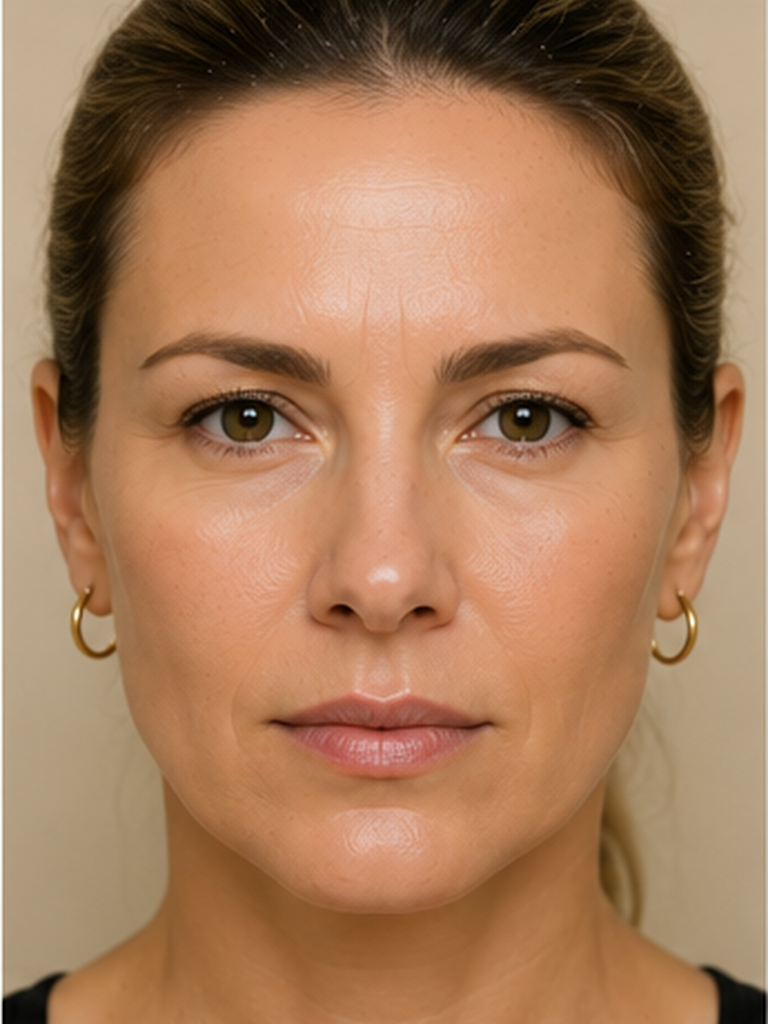
The short answer: Botox and other neuromodulators relax the muscles that cause expression lines, like frown lines and crow’s feet. Dermal fillers add volume under the skin to restore fullness, shape contours and soften deeper folds. One treats lines caused by movement; the other treats lines and hollows caused by lost volume.
Below, we compare the two side by side using the details from our wrinkle reduction and dermal filler pages, so you can walk into your consultation with a clear picture.
Botox vs fillers at a glance
| Neuromodulator (Botox, Dysport, Jeuveau) | Dermal fillers (hyaluronic acid) | |
|---|---|---|
| What it does | Relaxes the muscles that cause expression lines | Restores volume, defines contours and smooths deeper lines |
| Best for | Forehead lines, frown lines (the “11s”), crow’s feet, bunny lines, lip flip, masseter/jaw slimming | Lips, cheeks, nasolabial folds, under-eye hollows, jawline and chin, temples |
| Session time | About 30 minutes | 30 to 60 minutes |
| Downtime | About 1 hour of recovery listed | 24 to 48 hours; mild swelling and occasional bruising can occur |
| How often | Results typically last 4 to 6 months; quarterly touch-ups | As needed; results last 9 to 18 months depending on the area |
| Starting price at The Bodie Co | From $150 per area | From $650 per syringe |
How neuromodulators work
Many lines on the upper face form because the same muscles contract thousands of times a day when you frown, squint or raise your brows. A neuromodulator such as Botox, Dysport or Jeuveau is injected in small amounts to relax those specific muscles, so the skin above them creases less.
At The Bodie Co, our page describes a conservative, precision technique meant to soften lines while keeping natural movement. Typical treatments range from 20 to 50 units, depending on the area and your muscle strength.
Results are not instant. Initial softening usually begins within 3 to 5 days, with full results at around 10 to 14 days. A complimentary touch-up is available at two weeks if any asymmetry needs adjusting.
As with any injection, temporary redness, swelling or a small bruise at an injection site is possible. Your provider will go over what to expect.
How dermal fillers work
With age, the face can lose volume, which shows up as flatter cheeks, thinner lips, deeper folds or hollows under the eyes. Hyaluronic acid fillers are injected to replace some of that volume and add structure where it’s needed.
Results are visible right away and, according to our filler page, typically last 9 to 18 months depending on the area treated. Mild swelling and occasional bruising can occur for 24 to 48 hours, particularly with lips, though most clients return to normal activities the same day.
One reassuring point: hyaluronic acid fillers can be dissolved with hyaluronidase if needed. We discuss this at every filler consultation, and a consultation is always required before treatment.
Which should you choose?
A helpful way to think about it:
- Lines that appear when you move your face (frowning, smiling with your eyes, raising your brows) often respond to a neuromodulator.
- Lines or hollows that are there even when your face is at rest, or areas that have lost fullness, are often better suited to filler.
- Want shape rather than smoothness? Lip definition, cheek lift and jawline contour are filler territory.
- Want to soften a strong jaw muscle? Masseter treatment uses a neuromodulator, not filler.
Many faces have a little of both. A provider can look at how your face moves and where it has lost volume, then suggest a plan.
Can you combine them?
Neuromodulators and fillers do different jobs, so they are commonly used together in aesthetic practice. Our Liquid Facelift is one example: a full-face plan that combines hyaluronic acid fillers and neuromodulators in one appointment. Whether combining them makes sense for you, and in what order, is something to ask about at your consultation.
Frequently asked questions
Is Botox the same as filler?
No. Botox is a neuromodulator that relaxes muscles. Fillers are a gel, at The Bodie Co hyaluronic acid, that adds volume. They are different products with different uses.
Will I look frozen or overdone?
Our wrinkle reduction page describes a conservative technique that aims to keep natural movement. For fillers, your provider maps a plan to your features at consultation. Results vary, and a good plan starts with your goals.
Which lasts longer?
According to our treatment pages, neuromodulator results typically last 4 to 6 months, while filler results last 9 to 18 months depending on the area.
Which one works faster?
Filler results are immediate. Neuromodulators begin to soften lines in 3 to 5 days, with full results around 10 to 14 days.
Can fillers be reversed?
Yes. Hyaluronic acid fillers can be dissolved with hyaluronidase if needed.
Book a complimentary consultation
Not sure which you need? That’s what the consultation is for. Read more about neuromodulator wrinkle reduction and dermal fillers at The Bodie Co, then book your complimentary consultation at our NoMad studio. Members save on injectables through our membership tiers.
This page is for general information and is not medical advice. Results vary; a consultation determines whether a treatment is right for you.